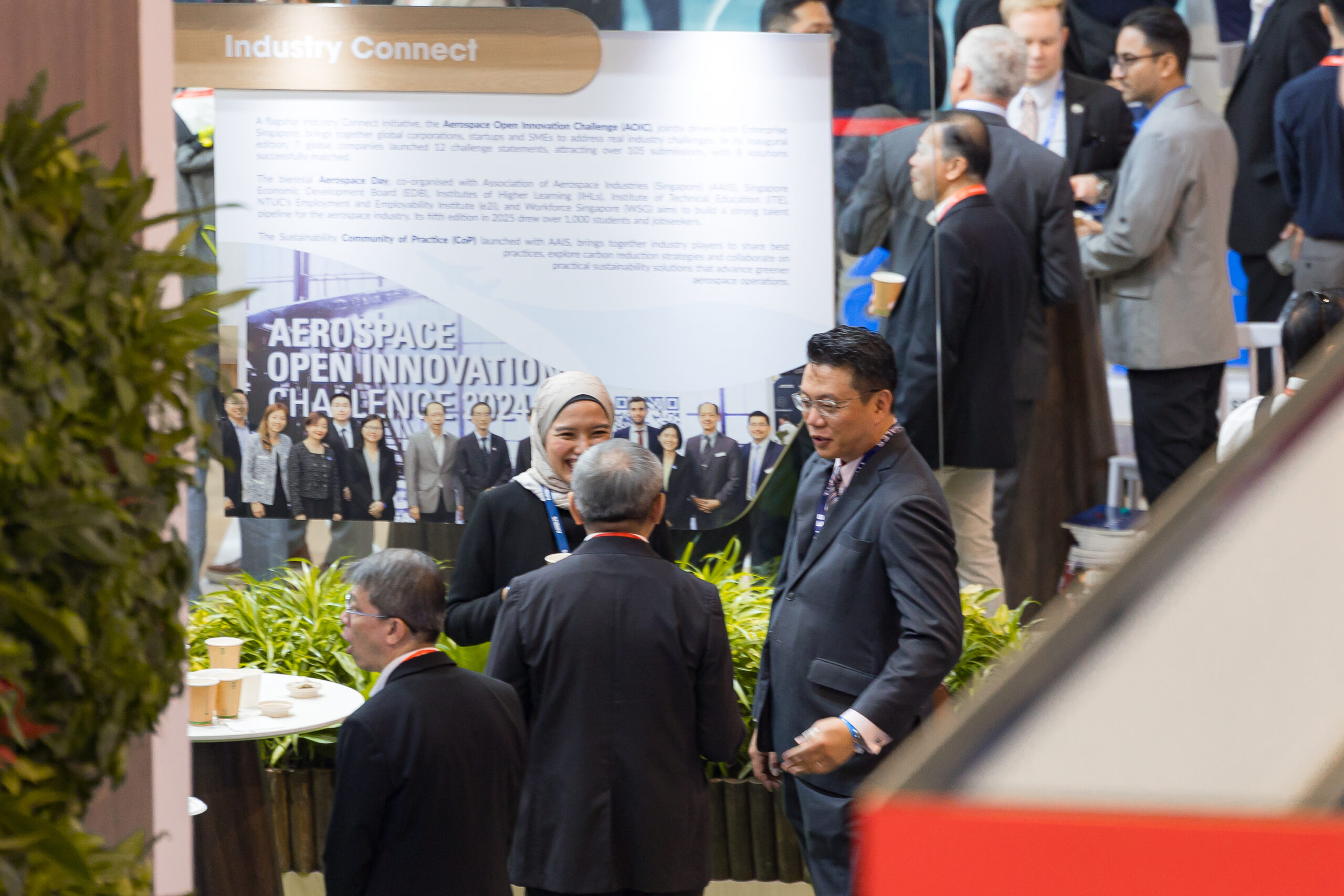
There is a moment at every well-designed event when something shifts.
A guest stops walking and leans in. A delegate puts down their phone. An attendee at a trade show stands still for longer than they planned. Something has caught their attention — not because it was loud or flashy, but because it spoke to them directly. It felt relevant. It made them feel something.
That moment does not happen by accident. It is the result of deliberate communication design.
Events Are Communication Platforms
It is easy to think of an event as a physical production — a venue, a stage, a schedule, a visual identity. But at its core, an event is a communication platform. Whether it is a conference, a product launch, a public activation, an exhibition, a government campaign, or an experiential brand event, the fundamental purpose is the same: to help an audience understand, experience, and connect with an idea.
Everything else — the design, the technology, the activities, the installations — exists in service of that purpose.
When this is understood, the question an organiser asks changes. Instead of “what can we put in the room?” the question becomes “what do we want our audience to think, feel, and remember when they leave?” That shift in thinking is where meaningful engagement begins.
Why Passive Experiences Fall Short
Most people have attended an event where they walked away with little more than a vague memory of being there. They sat through presentations. They browsed a few stands. They collected some collateral. But nothing quite landed.
This is the natural result of passive experience design — where the audience is treated as an observer rather than a participant.
Research in learning and communication has consistently shown that people retain far more information when they are actively involved than when they are simply watching or listening. The act of participation — making a choice, completing an interaction, contributing to something — creates a cognitive and emotional investment that passive observation cannot. People remember what they do far more than what they see.
Attention is also harder to hold than it has ever been. Audiences today carry the sum of the world’s information in their pockets, and they are accustomed to switching between streams of content continuously. In that environment, an event experience that does not engage — that does not require something of the audience — will struggle to compete, even when the content is genuinely valuable.
Engagement is not entertainment for its own sake. It is the mechanism that makes communication work.
Designing for How People Actually Process Information
Meaningful engagement starts with understanding how people receive and retain information, and designing experiences that work with that psychology rather than against it.
- People process experiences in layers. The first layer is sensory — what they see, hear, and feel when they enter a space. The second is cognitive — what they understand and can make sense of. The third is emotional — what resonates, what moves them, what they carry with them afterward. Effective event design works across all three layers, not just the first.
- Short attention spans require considered pacing. A long, unbroken presentation demands sustained focus that most audiences cannot maintain. Breaking information into smaller, more digestible moments — what might be called micro-experiences — allows people to engage more fully at each stage. A well-placed interactive moment, a short demonstration, a physical object to handle, a question posed to the room — these are not distractions from the message. They are the message, delivered in a way people can absorb.
- Stories are more memorable than facts. When information is framed within a narrative — a challenge, a journey, a transformation — it becomes easier to follow and harder to forget. This applies equally to a conference keynote, a product experience, and a public campaign. The audience should be able to feel the arc of what you are communicating, not just receive a series of data points.
- Participation creates ownership. When an attendee contributes to an experience — shares a perspective, makes a decision, completes an activity — they become part of the story rather than an audience for it. That sense of involvement deepens their connection to the idea and to the brand or organisation behind it.
The Role of Micro-Experiences
One of the most effective tools in engagement design is the micro-experience: a small, contained moment that communicates a single clear idea in a way that is immediately felt rather than processed.
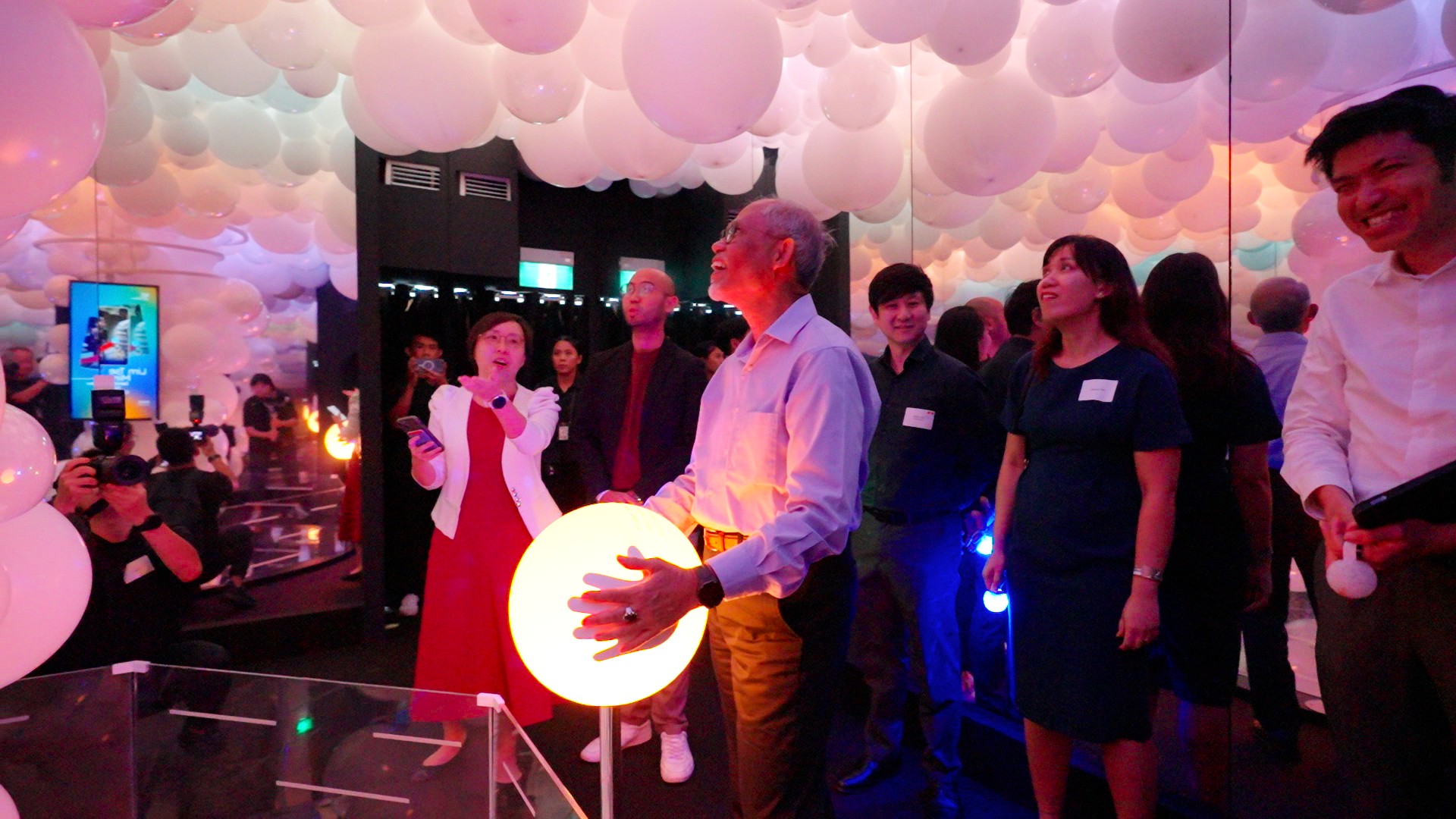
A micro-experience might be a hands-on demonstration that lets a guest feel the quality of a material. A visual installation that makes an abstract concept tangible. A question posed at the start of a session that the audience answers individually before the speaker addresses it. A brief activity that mirrors the challenge the brand exists to solve.
These moments work because they ask something of the audience. They are designed around a specific communication objective — what do we want this person to understand right now, and how can they experience rather than just hear it? When strung together thoughtfully across an event, micro-experiences create a cumulative effect. Attendees move through the experience feeling progressively more informed, more involved, and more connected.
The technology or activity used to deliver a micro-experience is secondary. What matters is clarity of purpose. A low-tech activity designed around a sharp communication objective will almost always outperform a sophisticated installation that has not been thought through.
Experiential Storytelling Across Event Types
This approach applies across every format and context.
At a conference, it might mean designing breakout sessions around a problem the delegates are trying to solve, so the discussion is not abstract but immediately relevant to their work.
At a product launch, it might mean letting guests interact with the product before they hear about it — so their experience informs how they receive the story, rather than the story preceding a hands-off display.
At a public activation or government campaign, it might mean creating a physical journey through which participants discover information progressively, so the message builds rather than being presented all at once.
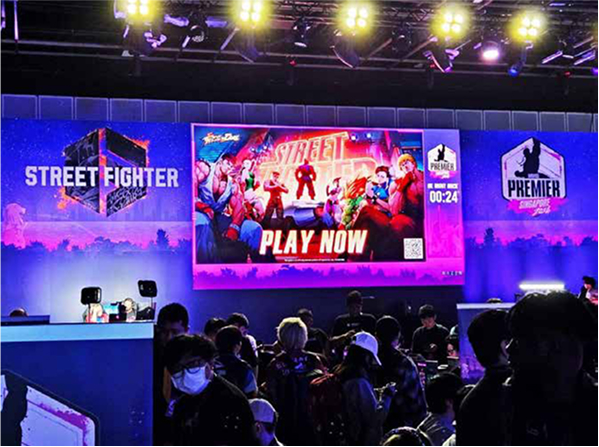
At an exhibition booth, it might mean replacing a product catalogue with a demonstration that shows rather than tells — inviting the visitor into the brand’s world rather than presenting information at them.
At an education event or sustainability showcase, it might mean structuring activities so participants arrive at conclusions themselves, rather than being told what to think.
In every case, the medium changes. The principle does not.
Technology as a Tool, Not a Statement
Technology has an important role in modern event engagement. Interactive screens, digital installations, immersive environments, and data-driven personalisation all have genuine value — when they are deployed in service of a communication objective.
The question to ask of any technology at an event is not “is this impressive?” but “does this help our audience understand, experience, or connect with what we are trying to communicate?” If the answer is yes, it earns its place. If the answer is that it creates a spectacle without advancing the message, it is likely to generate momentary attention without lasting impact.
The most engaging experiences are often not the most technologically complex. They are the ones that feel most considered — where the audience can sense that every element was designed with them in mind.
What This Looks Like in Practice
At Knoxx, engagement design begins with a communication question, not a production brief. Before we discuss formats, layouts, or activations, we ask: what does the audience need to leave this event knowing, feeling, and believing? What is the one thing they should carry with them?
From there, every decision — spatial design, programme flow, interactive moments, visual language, pacing — is evaluated against that objective. Technology and production are selected to serve the communication strategy, not to define it.
This approach works across every type of live experience we produce, from government campaigns and public activations to international conferences, brand exhibitions, and large-scale consumer events. The scale changes. The discipline remains the same.
The Standard Worth Holding
The events that people remember are rarely the ones with the biggest budgets or the most elaborate technology. They are the ones where someone clearly thought about the audience — where the experience felt designed for the people in the room, not just presented to them.
That level of intentionality is what separates an event that is attended from one that is remembered. And it begins with a single, honest question: what are we really trying to communicate, and how do we design an experience that makes it land?
Related reading: virtual and hybrid audiences.
If you are planning an event and want to discuss how engagement design can strengthen your communication objectives, speak with the Knoxx team.